

Environmental improvement
QAL is committed to achieving the highest standard of environmental performance.
Environmental Performance

QAL’s tenacity, skill of our people and unrelenting focus on improving everything that we do will continue to ensure that we continue to create economic and social benefits for our region in a safe and sustainable way.
Environmental management is integrated into all aspects of our business and decision-making and we strive for a culture of environmental excellence and leadership.
Management plans, procedures and policies have been developed specifically for the site to ensure that environmental performance is at the forefront of our operations.
In addition to meeting the requirements under the Environmental Protection Act 1994, QAL is regulated by an Environmental Authority issued by the Queensland Department of Environment, Tourism, Science and Innovation.
We report monthly on compliance against the site’s Environmental Authority and follow standards under Asset Management ISO55001and Environmental Management System ISO14001.
We continually strive to minimise the impact of our operations on our community; however, we are aware at times we may impact outside our boundary on dust, odour, noise and alkali.
Focus areas
Management plans, procedures and policies have been developed specifically for the site to ensure that environmental performance is at the forefront of our operations. As part of our commitment, we have identified four key areas:
-
Water useWater is essential to our refinery operations. Since the commissioning of Queensland’s largest water recycling project in 2002, we continue to recycle the majority of Gladstone city’s wastewater. In 2011, we began utilising treated effluent from Boyne Island/Tannum Sands for use in the refinery.
-
Air qualityA large number of controls have been implemented and are maintained to minimise any impact of airborne particulates. Community and site based continuous dust monitors, linked with wind speed and direction information, dust gauges and internal quality audits monitor the effectiveness of our dust reduction programs.
-
Land revegetationRevegetation of our process residue areas continue each year, both on site and in the buffer zone between our refinery and the community. Long-term revegetation work on the former residue disposal area continues to be extremely successful with a large supply of grass for dust control and trees as shelter for native animals and birdlife.
-
Waste managementWe work to promote recycling programs across all facets of our business. Since June 2003 QAL has operated an on site Waste Transfer Facility. The facility receives and sorts all QAL’s general waste streams to improve the proportion of waste able to be recycled or reused. By recycling and reusing waste in 2017, we have avoided the release of 1,832 tonnes of CO2, which is equivalent to planting 6,832 trees, or removing 458 cars off the road for one year. In 2016, QAL recycled 93 per cent of materials brought to the waste transfer facility.
If you have concerns regarding our operations, please visit our Contact page for how we can assist.
5 Year Environmental Improvement Program

We take a serious approach to caring for the environment, our team members and the community to remain a sustainable operator for future generations.
In August 2018 we actioned a 5 Year Environmental Improvement Strategy (5YES) to reduce our environmental risk profile while elevating environmental stewardship values in team culture.
Investment in the strategy grew since its inception and over $458 million has been spent to date on this work with over 70 projects. Environmental performance has improved year on year since the 5YES projects were implemented and we’re continuing to recognise innovations and initiatives led from all levels of our business that support ongoing protection of the environment.
Our progress
Watch key highlights from the 5-Year Environment Strategy | 5 Year Update or click here to see how the strategy tracked over the last five years.
Partnerships
As part of our commitment to environmental excellence and sustainability, we have partnered with multiple research groups to facilitate a range of studies.
-
 Monitoring Bird Populations
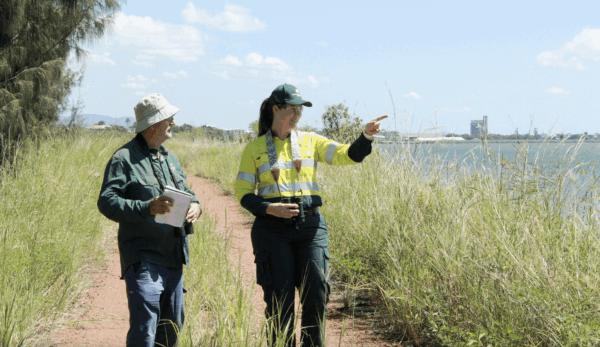
Through a longstanding partnership with the Capricorn Water Bird Survey Group, we’ve facilitated the capture of essential data that provides a clearer picture of shorebird and wader bird populations in our region.
The monitoring data captured enables researchers and specialists to draw trends and improve understanding of wader bird movements, species prevalence and the environment more broadly. In 2024, QAL’s Environment Team led the volunteers through 11 surveys, counting 12,000 birds (including recurring appearances) across more than 60 species, from jabirus, to pelicans, swans to cormorants, and many more. Through the monthly surveys, the group has observed up to 0.5% of the world’s Far Eastern Curlew population – a critically endangered species – in our buffer zone. QAL were proud to recognise 30 years of partnership with the Capricorn Wader Bird Survey Group in 2025.
-
 Black Breasted Button Quail
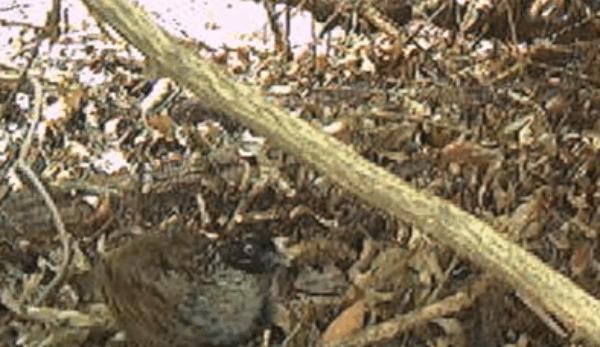
Roughly two decades ago, evidence of Black Breasted Button Quail (BBBQ) bird habitation at QAL’s Red Mud Dam northern boundary triggered an ambitious plan to re-establish their native habitat and encourage breeding in the area.
Since then, we’ve conducted weeding programs, removed invasive grasses, reviewed and improved fire management strategies and planted the vine thicket habitat favoured by the birds.
Over the years only small circular depressions were seen to suggest the birds were still in the area. Post-project camera traps captured this species in the rehabilitated habitat and, more recently, adult quails and their chicks have been observed following wall encasement projects.
-
 Thermal Oxidiser
QAL operates two thermal oxidiser units which destroy odorous gases and liquids collected from the Digestion area of the plant while in operation.
These units operate in a similar way to an oversized Bunsen Burner to destroy odorous streams at high temperatures – reaching around 950 degrees Celsius.
The first unit was commissioned in 2004 followed by a second unit in 2020 under a 5YES project to achieve better coverage during maintenance and shutdown works.
-
 Technosol – our key to rehabilitation
QAL and Rio Tinto have partnered with University of Queensland researchers at the Sustainable Minerals Institute (SMI) to trial soil rehabilitation techniques on red mud.
When red mud – a by-product of the alumina refining – is filtered from the process, it’s pumped from the refinery to a residue disposal area on Boyne Island, which will be covered and rehabilitated when operations one day cease.
SMI researchers are using bio-engineering technology to transform red mud into a soil-like material capable of hosting plant life, called ‘technosol’. In 2021, the trials moved to full scale production and, more recently, the institute received additional funding from the Australian Research Council to continue finding better ways to rehabilitate tailings facilities, like our red mud dam, and care for the surrounding ecosystems.
-
 Non Thermal Plasma
Non Thermal Plasma (NTP) is used for the destruction of odorous compounds present in vapour sources by generating a high voltage Plasma field. When the odorous compounds pass through the plasma field, they are broken down (destroyed) to form smaller non odorous compounds.
NTP was successfully trialled at QAL in 2019 and now a full-scale plant has been installed.